
Article on Standardization of Geographical Names: Challenges and Solutions in the Context of Different Languages and Regions Published in UNGEGN Bulletin No. 70
An article from Iran on the standardization of geographical names has been published in the 70th issue of the United Nations Group of Experts on Geographical Names (UNGEGN) Bulletin
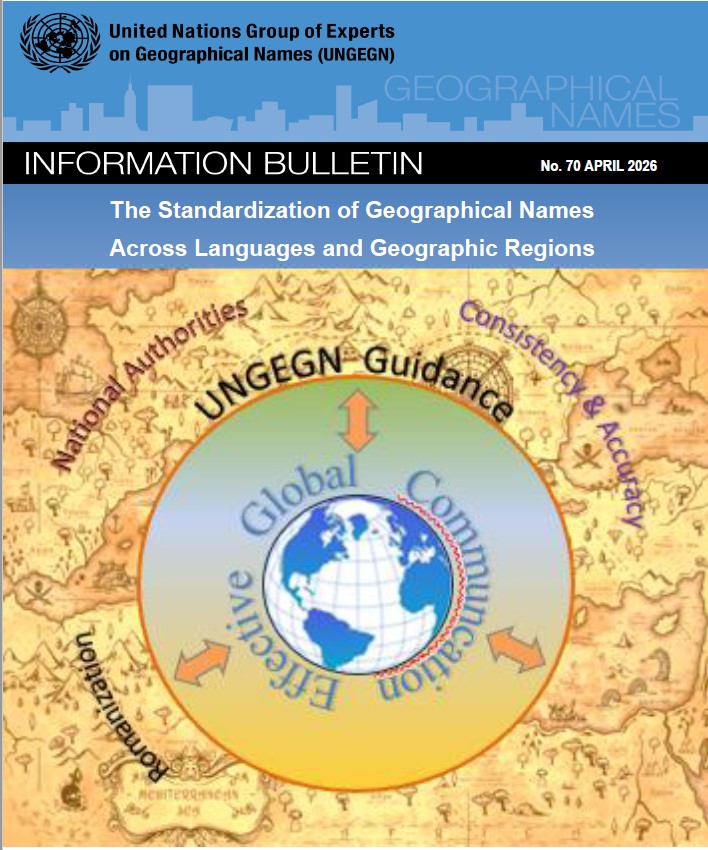
According to the Public Relations Office of the National Cartographic Center of Iran, quoting the Iranian Specialized Committee on Toponymy and Standardization of Geographical Names, this edition of the bulletin is dedicated to the theme "The Standardization of Geographical Names across languages and geographic regions." The article, submitted by the secretariat of the Iranian committee to the UN expert group, has been published on page 42 of the bulletin. Authored by Raheleh Alizadeh and Abolfazl Bolandian, the piece emphasizes that geographical names are not merely labels for places but rather reflections of the history, culture, language, and identity of a nation or ethnic group, and that the accurate recording of these names on maps, atlases, and in geographical documents is not only a national necessity but also a preserver of cultural and historical heritage.
In this article, the standardization of geographical names in Iran is presented as a fundamental and strategic project that plays an unparalleled role in protecting cultural heritage, strengthening national identity, and ensuring territorial integrity. Given Iran's unique linguistic and cultural diversity, this process is interpreted not merely as homogenization but as building a bridge between the past and the future, the local and the national, and tradition and modernity. According to the authors, creating a comprehensive and multilingual database capable of providing correct pronunciation, accurate transliteration, and the simultaneous recording of names in both official and local forms is the only viable solution to achieve this lofty goal. Such a system, while preventing the distortion and alteration of name pronunciations and spellings, would serve as an authoritative reference for tourists, researchers, and governmental and international institutions, eliminating confusion arising from multiple and incorrect names.
The success of this project, the authors argue, depends on adhering to three fundamental principles: preserving linguistic and cultural diversity by recording names in all common languages of the country; creating an intelligent balance between local and national identity by using Persian script as a common denominator; and securing comprehensive participation and cooperation from relevant governmental institutions and local communities through the formation of specialized committees comprising linguists, historians, and regional representatives. In conclusion, the authors state that for Iran, this project represents a historic opportunity to enhance precision and efficiency in territorial management, showcase its cultural richness, and strengthen national unity in light of respect for ethnic and linguistic plurality, ultimately leaving an enduring legacy for future generations where scientific accuracy, national cohesion, and cultural wealth are seen in perfect harmony. The full bulletin can be accessed at the official UN Statistics Division link provided in the original report.
Article link: https://unstats.un.org/unsd/ungegn/pubs/Bulletin/UNGEGN-bulletin-no.70.pdf




comment